

When choosing a storage shed, lifespan is often one of the most important questions. A shed is not a short-term purchase—it sits outdoors year after year, exposed to sun, rain, wind, and temperature changes. How long a shed lasts depends largely on its material, construction, and how it is used. Below, we break down the expected lifespan of metal and plastic sheds, and what factors influence their long-term performance.
Table of Contents:[hide]
How Long Do Metal Sheds Really Last?

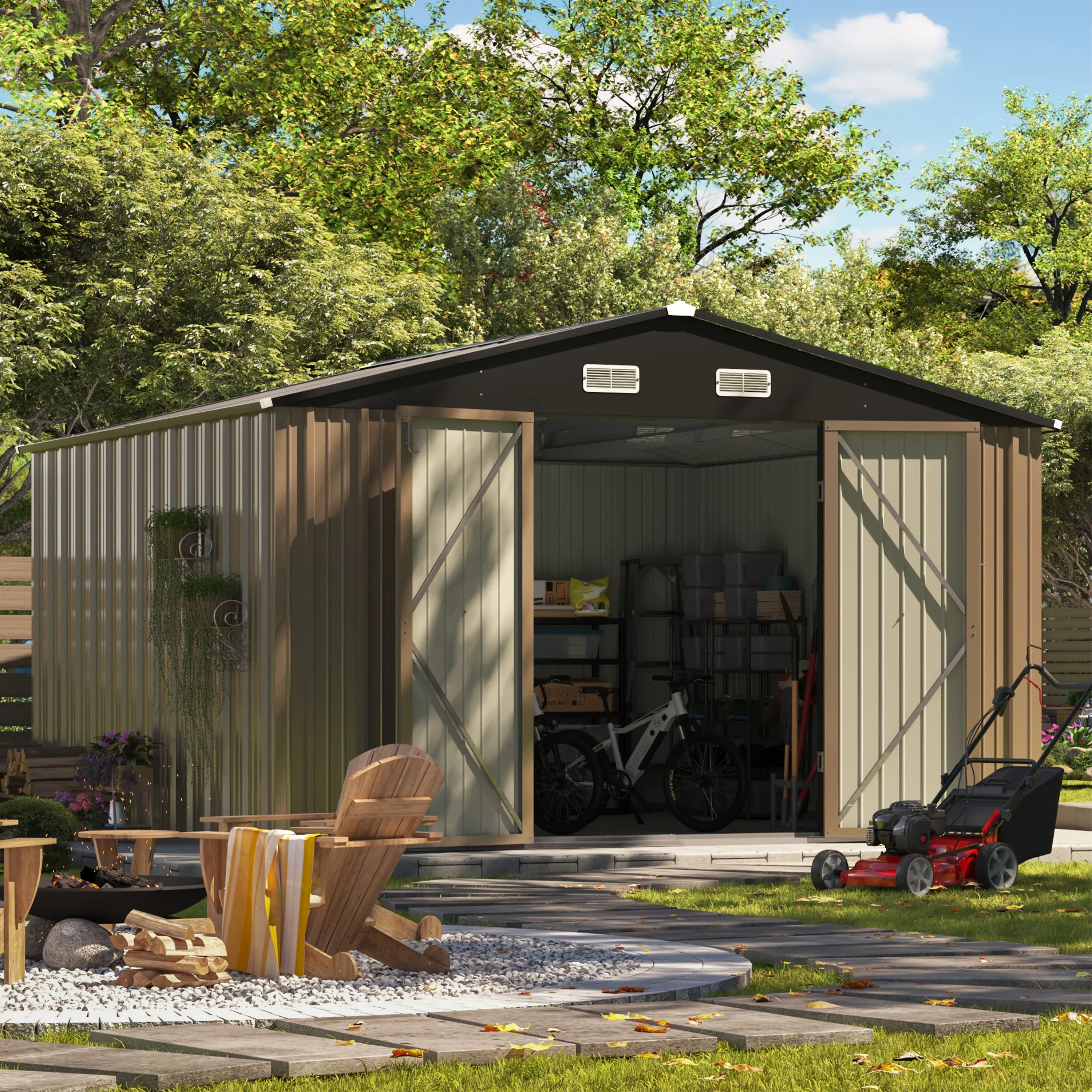
Patiowell 10x10 Metal Storage Shed with Weather-Resistance, Brown
Metal sheds are often chosen for their durability and security. In dry or moderate climates, a well-built metal shed can last 5–10 years, especially when panels are properly treated and installed on a solid & level base.
One clear advantage of metal sheds is strength. They are hard to break into, resist impact well, and handle heavy storage loads with ease. Metal sheds also tend to have a lower upfront purchase cost, making them attractive for buyers who need large storage at a reasonable price.
However, long-term performance depends heavily on environment. In humid or coastal areas, metal sheds can rust over time if coatings are damaged or drainage is poor. Temperature control is another drawback. Metal heats up quickly in summer and becomes very cold in winter, which can affect stored items and user comfort. Assembly and customization can also be more challenging, as metal panels are heavier and harder to modify once installed.
In short: metal sheds last a long time when conditions are right, but they require more attention to climate and installation quality.
How Long Do Resin (Plastic) Sheds Last?

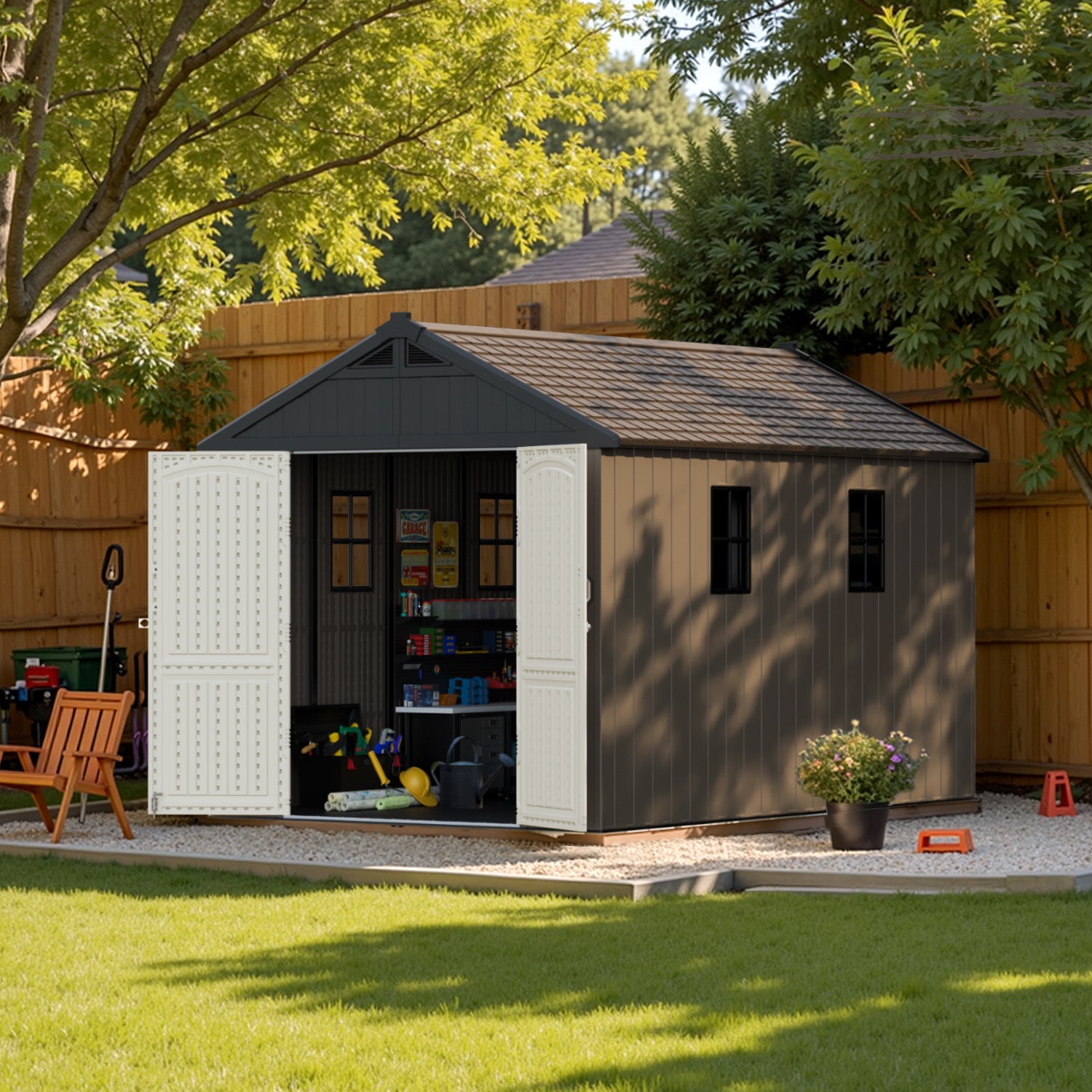
Kick-it 8x10 Plastic Storage Shed with Floor and Windows, Gray White
High-quality resin sheds are designed for low-maintenance, long-term outdoor use. On average, a resin shed lasts 10–20 years, with some lasting even longer when made with UV-stabilized materials.
One of the biggest advantages of resin sheds is resistance. They do not rot, rust, or attract insects, and they handle rain and moisture extremely well. Cleaning is simple, and no painting or sealing is required. Many resin sheds come as complete kits, making them easy to assemble, even for first-time users.
Resin sheds are also visually appealing, often designed to blend naturally into residential yards. Their weather resistance makes them reliable across seasons with minimal upkeep.
That said, resin sheds have limitations. Wall load-bearing capacity is usually lower than metal, which means heavy shelving or wall-mounted equipment may need extra planning. Customization options are also limited, and without proper UV inhibitors, lower-quality plastic may fade over time.
In short: resin sheds trade extreme strength for ease of use, low maintenance, and consistent long-term performance.
Metal vs Resin: Which Shed Lasts Longer?
When comparing lifespan alone, metal and resin sheds can last a similar number of years. However, climate plays a major role. In rainy or humid areas, metal sheds may experience a shorter lifespan due to rust, while resin sheds tend to age more gracefully, with fewer issues related to moisture, corrosion, or ongoing maintenance.
The “longer-lasting” option depends on how and where the shed is used:
- Choose metal if you need maximum strength, security, and large storage capacity, and you live in a relatively dry climate.
- Choose resin if you value low maintenance, easy assembly, and reliable performance across changing weather conditions.
A shed that matches its environment and use case will always last longer than one chosen for material alone.
Conclusion
So, how long should a storage shed last? Ideally, long enough that you never need to think about replacing it. Metal sheds offer strength and longevity when climate conditions allow, while resin sheds deliver dependable, low-maintenance performance year after year. Understanding the real pros and cons of each material helps ensure your shed remains a long-term solution, not a short-term fix.At Patiowell, all sheds come with a 10-year warranty, excluding damage caused by improper use or extreme weather conditions.
Diana Mason
Hi there! I’m Diana Mason, the chief editor of Patiowell brand. With over 15 years of diving deep into the world of outdoor furniture, I’ve developed a keen eye for what makes outdoor spaces truly special. I love sharing tips and inspiration to help you create your perfect backyard retreat. Our blog is a reflection of my passion and expertise, featuring only the best pieces that I personally vouch for. Thanks for stopping by—I can't wait to help you transform your outdoor living space!

Leave a comment
All comments are moderated before being published.
This site is protected by hCaptcha and the hCaptcha Privacy Policy and Terms of Service apply.